Let Your Home Work for You
Many years ago, I was part of a homemaking group run by a woman who said something that stayed with me all these years.
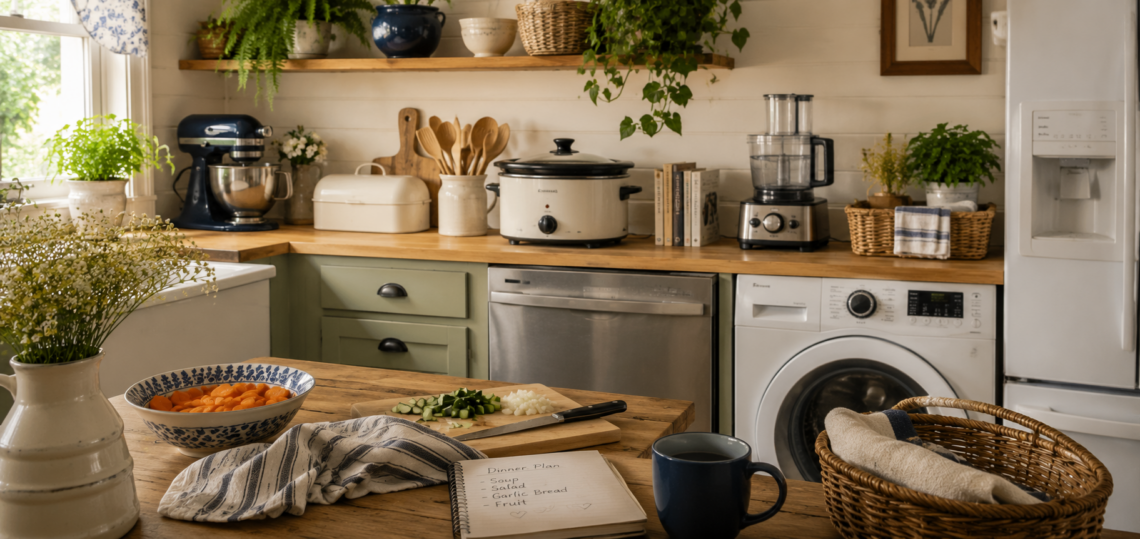
She talked about the modern conveniences in our homes as “servants.”
The dishwasher.
The crock pot.
The washing machine.
The freezer.
The bread machine.
The food processor.
The vacuum cleaner.
These tools were designed to help carry some of the weight of daily life.
And yet, so often, we don’t truly use them in ways that serve us well.
Some appliances sit untouched in cabinets because we think using them somehow “doesn’t count” as real homemaking. Others are used only occasionally while we continue doing things the hardest possible way because that’s what we think we’re supposed to do.
But I’ve come to believe that using modern conveniences wisely is not laziness.
It’s stewardship.
Especially for those of us dealing with:
- chronic illness
- fatigue
- busy family life
- caregiving
- work schedules
- limited energy
- or simply the demands of everyday living
Our homes should support us, not exhaust us.
And modern tools can create breathing room when we use them intentionally.
For example:
my crock pot is not just an appliance. It is extra help in the kitchen on days when my energy is low. A freezer meal isn’t “cheating.” It’s a gift to my future self on a difficult evening. Running the dishwasher regularly instead of handwashing every dish saves both time and physical energy.
Even something as simple as using a food processor to chop vegetables can turn an overwhelming task into a manageable one.
These things matter.
For a long time, I think homemaking culture sometimes unintentionally created the idea that everything had to be done the hardest, most traditional way possible in order to have value.
But real life is not a historical reenactment.
Most of us are balancing many responsibilities at once. Many people are tired in ways that go far beyond simply needing more sleep. And there is no prize for making daily life unnecessarily difficult.
The goal of homemaking is not exhaustion.
The goal is creating a home that functions well and supports the people living inside it.
That means learning to use the tools available to us wisely.
A washing machine gives us time back.
A slow cooker reduces evening stress.
A freezer allows us to prepare ahead in small ways.
A dishwasher saves physical labor and mental clutter.
When we use these things intentionally, they become part of the rhythm of the home instead of just taking up space in it.
And honestly, I think many of us need permission to stop overcomplicating simple things.
There is no shame in:
- buying pre-cut vegetables sometimes
- doubling soup for the freezer
- using paper plates during difficult seasons
- relying on kitchen appliances
- simplifying meals
- resting while dinner cooks itself
Simple living does not mean doing everything manually.
Sometimes simple living means thoughtfully using the resources we already have so we can protect our time, energy, health, and peace.
A home should not consume every ounce of a person.
It should support life being lived inside it.
And perhaps one of the most overlooked forms of wisdom in homemaking is learning how to let our homes work for us instead of constantly working against ourselves.