A Small Batch Still Matters
For a long time, I thought food preservation had to be a major event.
Every article, video, and homesteading post seemed to involve:
- huge harvests
- giant canning sessions
- endless prep work
- dozens upon dozens of perfectly labeled jars
And honestly, it felt exhausting before I even started.
Living in Florida has taught me that gardening—and preserving food—often looks very different here than it does in many other parts of the country. Large tomatoes don’t do especially well for us, but cherry tomatoes grow like they’re determined to take over the yard.
Right now they’re coming on slowly, just a handful ripe each day.
Years ago, I probably would have ignored them because I didn’t have enough at once to justify “real” canning. But these days, I approach things differently.
Each day, I picked what was ripe and simply placed them in the refrigerator. Little by little, they accumulated until eventually I had enough for a small batch in my Nesco/Carey electric canner.
Nothing fancy. Nothing complicated.
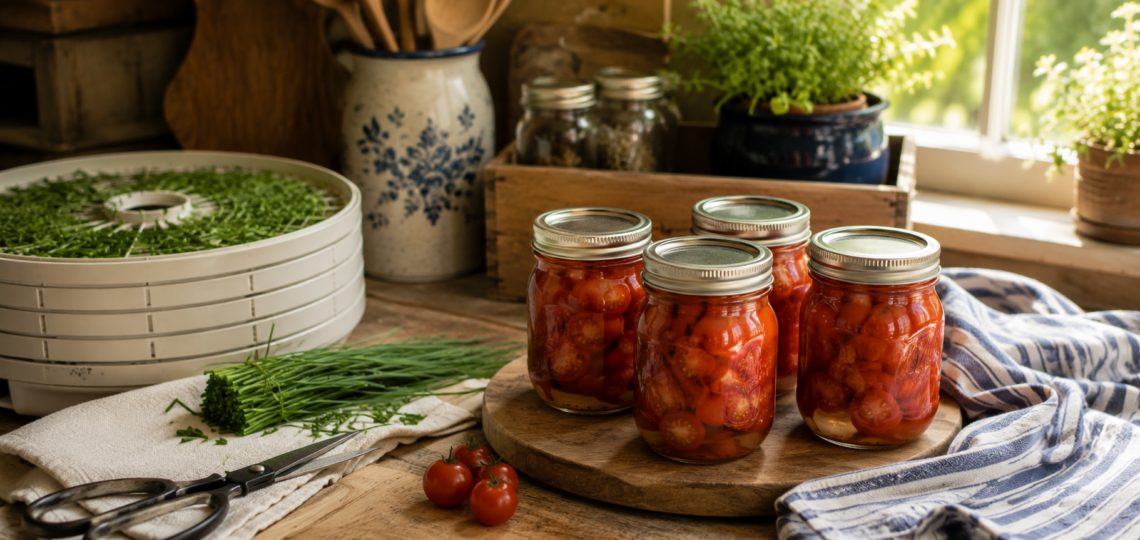
I washed the tomatoes, cut them in half, packed them into pint jars, added salt and lemon juice for safe acidity, then topped them with boiling water. I leave the skins on because they contain nutrition and work perfectly in the kinds of meals we actually eat:
- chili
- soups
- stews
- sauces
Altogether, the process probably took about thirty minutes of actual effort, spread naturally throughout the day.
A couple hours later, the canner finished processing and I had four beautiful pints of tomatoes cooling on the counter, ready for the pantry shelf.
Now, some people might look at four jars and think:
“That’s not very much.”
But here’s the thing:
those four jars cost me very little.
A little time.
A little electricity.
A garden space we slowly established over time.
Canning supplies gathered little by little over the years.
And because the tomatoes were grown organically, purchasing the equivalent amount in a store would have been surprisingly expensive.
That’s something I think many people overlook.
Small batch preservation may not create dramatic social media photos, but over time it quietly creates real savings.
A few jars here.
A few freezer meals there.
A handful of dehydrated herbs.
Some vegetables tucked away for later.
Little by little, those things add up.
And perhaps even more importantly, they create convenience.
We’ve become so accustomed to buying convenience foods that we sometimes forget we can create convenience for ourselves instead.
That realization changed so much for me.
Instead of relying entirely on expensive prepackaged shortcuts, I can preserve food in ways that make future meals easier:
- tomatoes ready for soup
- herbs already prepared
- freezer meals for exhausting days
- ingredients ready to grab from the pantry
Not because I spent an exhausting weekend trying to do everything at once, but because I worked in small, manageable batches as life allowed.
That same mindset recently carried over into another simple task around our home.
Our garlic chives—which were originally a gift from my cousin—needed to be cut back. We don’t use them constantly, but they add wonderful flavor to soups and savory dishes.
So I harvested them, used scissors to snip them directly onto dehydrator trays, and turned the dehydrator on.
That’s it.
Maybe fifteen minutes total.
Now I’ll have homegrown organic herbs ready whenever I need them.
No overwhelming production.
No giant homestead operation.
No exhausting marathon kitchen sessions.
Just small steps woven naturally into everyday life.
I think many people avoid food preservation because they believe it has to consume an entire day or weekend to be worthwhile. But it doesn’t.
A few jars matter.
A handful of herbs matters.
One freezer meal matters.
Especially when those small efforts create less stress, less waste, more nourishment, and more breathing room later on.
And honestly, I think that gentler approach is what makes simple living sustainable.
Because homemaking should support our lives—not completely consume them.